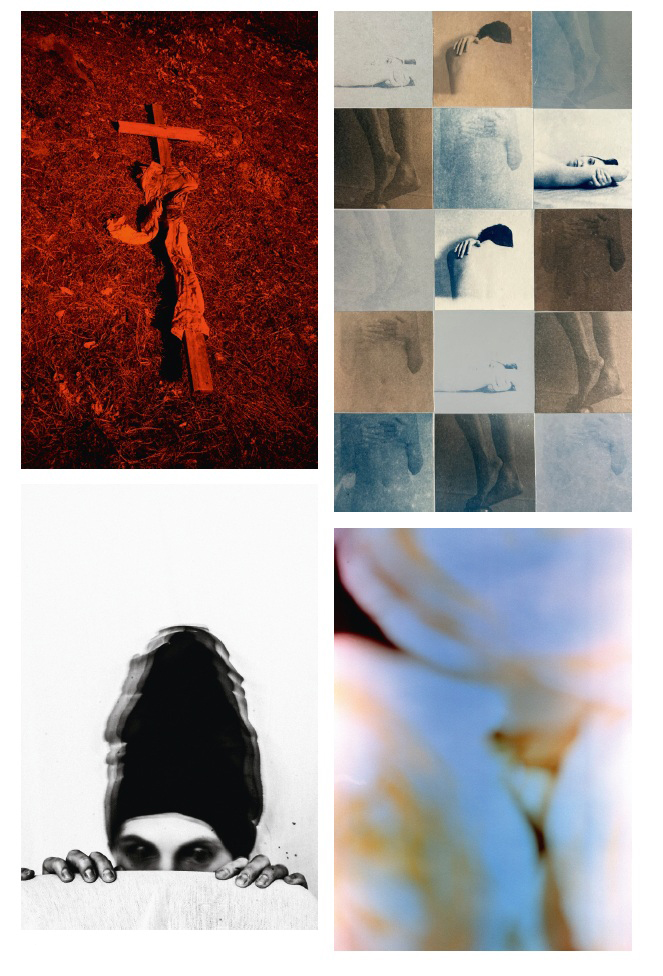
Where the Anthropocene is so often visualized through images of sublime devastation – vast, distant, authored by no one in particular – the works in this group exhibition insist on intimacy, on self-re flection through the gaze of the self-portrait, on care, and on the question of who specifically bears the weight of our world and who has historically been erased from its telling. War and its after math belong inescapably to the works presented.
The destruction of a nation, a culture, of life itself is one of the most violent accelerants of the Anthropocene: scorched fields, poisoned soil, contaminated groundwater, forests torn to splinters, tanks and drones – russia’s ongoing war of aggression against Ukraine makes this brutally clear. To see the world through the eyes of Diana Fedoriaka, Vlada Lobus, Bogdana Tkakh, Julia Reyvakh and Iryna Vlasyuk – the eyes of women still living in the country as well as those who have fled and now live abroad – is to recognize that the violence done to bodies and minds and the violence done to the earth are not parallel stories, but one: told from a vantage point too rarely given a frame.